Guide · social alternatives
Instagram Alternatives for Photographers: VSCO vs Flickr vs Glass
The right Instagram alternative depends on what you want photography to do: present a portfolio, preserve an archive, support critique, organize a niche group, or test a creator-reward model. Compare the product mechanics before moving your audience.
By Vistafolk Editorial TeamPublished August 14, 2026 · Updated September 3, 2026Editorial method
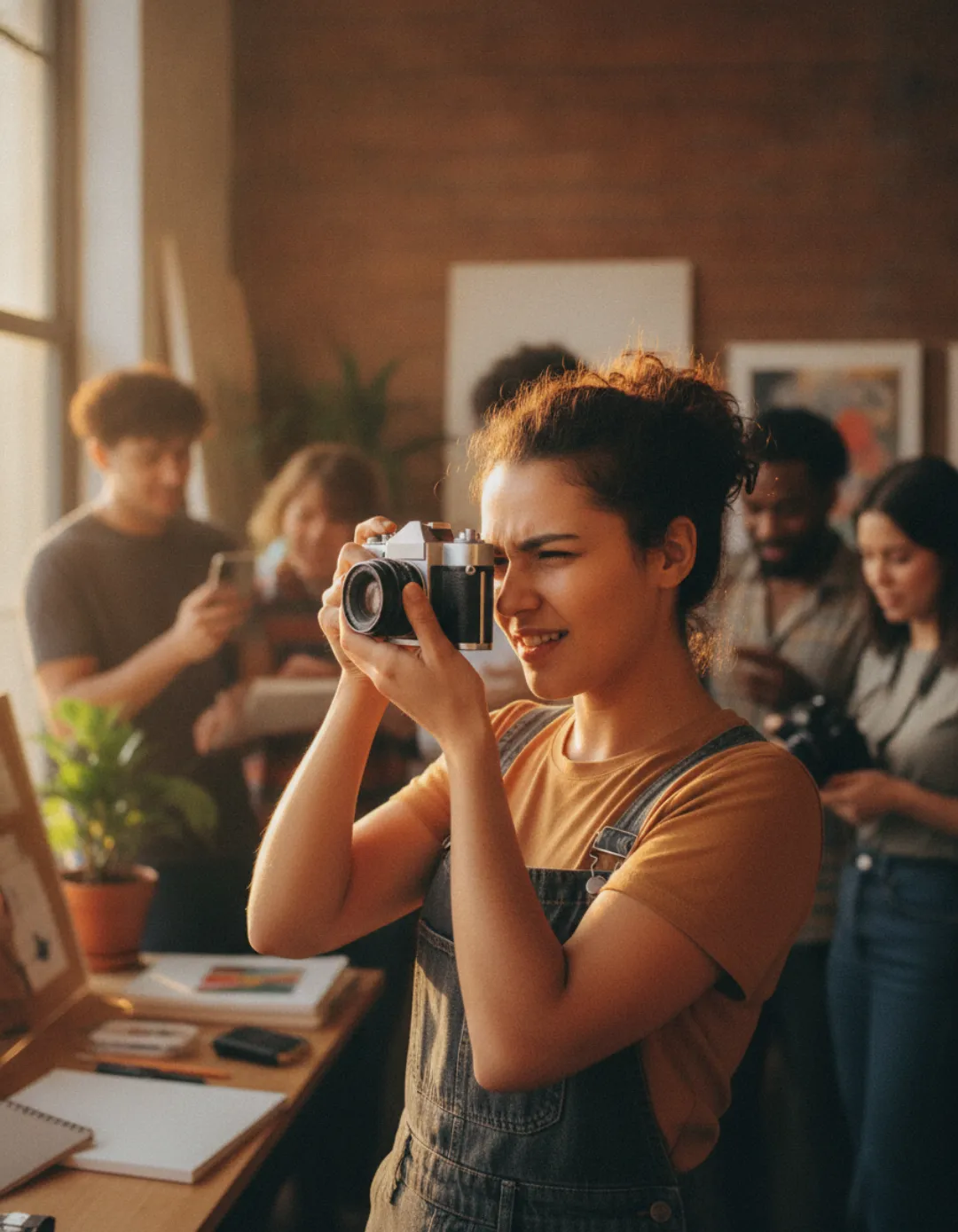
An Instagram alternative for photographers should solve a specific problem, not merely provide another place to upload the same image. Some photographers want a calmer feed. Others need albums, technical metadata, constructive critique, a niche group, or a clearer economic relationship with the platform.
VSCO, Flickr, Glass, and Vistafolk approach those jobs differently. None is a drop-in replacement for every part of Instagram, and Vistafolk is still recruiting its founding community rather than offering a generally available mature network.
A practical comparison
| Platform | Feed and presentation | Community structure | Business-model signal | Best fit to test |
|---|---|---|---|---|
| VSCO | Visual profiles, editing tools, following and recommended feeds | Shared Spaces can organize galleries, contributors, viewers, and discussions | Free access plus paid membership features | Collaborative galleries, inspiration, editing, and creator discussion |
| Flickr | Photostreams, albums, collections, tags, EXIF, and licensing controls | Public, invite-only, and private groups with photo pools and discussions | Free limits plus a Pro subscription | Archives, organized bodies of work, technical context, and established interest groups |
| Glass | High-resolution presentation, chronological feed, public profiles, categories, and camera or lens feeds | Photography-focused discussion without public popularity counts | Member-funded subscription with a limited viewer tier | Deliberate photography viewing, critique, and an ad-free member community |
| Vistafolk | A planned niche visual feed built around original work and curation | The first community is intentionally limited to 30-50 creators and constructive curators | Proposed surplus-sharing model; shadow ledger before real payouts | Helping shape a small creator-reward experiment from the beginning |
This is not a ranking. Features, limits, and prices change, so confirm the current terms on each service before committing your archive or paying for a plan.
Choose the job before the app
The broad query “what should replace Instagram?” hides several narrower decisions. Write down the one outcome that matters most over the next month.
If you want collaborative galleries
VSCO describes Spaces as shared galleries where creators can invite contributors, add photographs, and discuss individual images. Spaces can therefore suit a project, moodboard, theme, event, or small working group better than a general broadcast feed.
The important question is whether the people you want to collaborate with can join and contribute under the current membership rules. A beautiful empty space is still empty, so test the invitation flow with two or three real collaborators.
If you want an organized photography archive
Flickr’s current getting-started documentation covers albums, collections, tags, privacy settings, and group participation. Those tools matter when a photograph is part of a series, trip, event, or long-running portfolio rather than a short-lived post.
Flickr also retains camera information, descriptions, licensing choices, and interest-based discovery. Check storage limits and privacy defaults for your account type, then upload a small coherent set before transferring a full archive.
If you want photography discussion without public scorekeeping
Glass says its paid membership removes ads and engagement algorithms, uses a chronological feed, and avoids public counts. Its membership page also describes high-resolution uploads, public profiles, discussions, categories, and camera or lens feeds.
That model asks members to fund the product directly. The tradeoff is straightforward: a subscription can align the service with members, but it also creates a participation cost. Use the available viewing or trial options to judge whether the active community matches the kind of photography and feedback you value.
If you want a small niche community with a reward experiment
Vistafolk is designed to launch one visual niche at a time. It proposes to allocate 80% of distributable surplus, after operating costs and a prudent reserve, to a community pool for original creators, curators, and eligible active members. The operator receives the remaining 20%.
That is not 80% of gross revenue, and it is not equity or guaranteed income. The internal allocation is provisional. A shadow ledger will test the formula before real payouts begin, and early rewards may be small.
The reason to join now is not a promised payout. It is the opportunity to help shape how original work, thoughtful curation, replies, and community care should be recognized in the first niche. Read how Vistafolk differs from a conventional paying Instagram alternative before requesting a place.
VSCO vs Flickr: how the two platforms differ
Both VSCO and Flickr serve photographers who have outgrown a broadcast feed, but they solve different problems.
| Dimension | VSCO | Flickr |
|---|---|---|
| Core purpose | Editing tools, curated visual profiles, and shared Spaces for collaborative galleries | Photo archive, structured albums, interest-group discovery, and technical metadata |
| Organization | Profiles and contributor Spaces for shared galleries | Albums, collections, tags, EXIF records, and per-image licensing controls |
| Community structure | Spaces with contributor invitations, image discussions, and viewer controls | Public and invite-only groups with photo pools, discussion threads, and long-running topic communities |
| Business model | Free access with optional paid membership features | Free storage tier with a Pro subscription for additional storage and features |
| Creator economics | Subscription and platform services, not a creator-payment program for ordinary posts | Subscription and platform services, not a creator-payment program for ordinary posts |
| Best fit | Collaborative projects, moodboarding, visual inspiration, and creative discussion among a defined group | Organized archives, technical EXIF context, established subject-matter communities, and long-term portfolio storage |
The choice often reduces to whether your priority is working with other photographers on a shared project (VSCO Spaces) or building a record of your own work that others can discover by subject, gear, or location (Flickr groups and tags). Neither replaces the other for every photographer, and neither replaces Instagram’s distribution reach.
If neither VSCO nor Flickr addresses the economic relationship between your creative output and the platform, compare how major social platforms share revenue with creators before committing to any service.
Six checks before moving your photography
1. Feed control
Find out whether the feed is chronological, recommendation-led, curated, or a mixture. Then test whether you can reliably return to work from photographers you deliberately follow.
2. Image treatment
Upload a detailed image and inspect compression, color, cropping, captions, accessibility text, EXIF handling, and the desktop view. Product claims matter less than what happens to your own file.
3. Community mechanics
Look beyond likes. Can people discuss an image, create a group, invite contributors, moderate a space, save a body of work, or discover a narrow subject? Flickr’s official group guide is a useful example of explicit joining, posting, discussion, and administration mechanics.
4. Audience portability
Check whether public profiles are linkable, whether images can be shared elsewhere, and whether you can export your data. Keep original files and metadata outside every social platform.
5. Economic alignment
Ask who funds the service: advertisers, subscribers, clients, sponsors, commerce, or another source. If creators may receive rewards, identify the qualifying activity, the calculation base, the deductions, and the point at which an estimate becomes payable. For a platform-by-platform breakdown of which major social networks share revenue with creators and how each program is structured, see social media platforms that share revenue with creators.
6. Safety and moderation
Review blocking, reporting, privacy, group rules, and account enforcement. For a niche group, find out who can admit members and remove harmful contributions. Community quality is a product feature, not an accidental by-product.
Run a 30-day test instead of making a dramatic move
Choose one platform and one job. Publish a coherent set of five to ten images, participate in a few relevant discussions, and invite a small number of people who genuinely care about the subject. After 30 days, review:
- whether you wanted to return even when notifications were quiet;
- whether feedback showed attention to the work;
- whether you found people through shared interests rather than raw popularity;
- whether the service’s funding model felt understandable;
- and whether you could keep control of your files and relationships.
Keep Instagram if it still performs a useful distribution job. An alternative does not have to replace everything on day one. It can become the better home for one part of your creative practice.
If a small, candid reward experiment is the part you want to test, request a place in Vistafolk’s founding community. Join for the product and the people first, because there is no guaranteed reward or payout date.
FAQ
What is the best Instagram alternative for photographers?
There is no universal best option. VSCO emphasizes editing and shared creative spaces, Flickr combines organization with long-running interest groups, Glass offers a subscription-funded photography community, and Vistafolk is testing a small niche network with provisional community rewards.
Which Instagram alternative pays photographers?
Do not choose from a headline alone. Vistafolk proposes to allocate 80% of distributable surplus to a community pool, but real payouts have not begun and early rewards may be small. Other services have different business models and may not reward ordinary posting.
Should I delete Instagram when trying another photography app?
Usually no. Test one clear job on the alternative first, keep copies of your originals, tell existing followers where to find you, and evaluate the quality of interaction before moving more of your publishing routine.
How does VSCO compare to Flickr for photographers?
VSCO suits photographers who want collaborative gallery Spaces, editing tools, and a curated visual profile. Flickr suits those who want a structured photo archive, technical metadata, EXIF records, interest-group discovery, and long-term organization. Both earn through subscriptions and platform services rather than creator-payment programs.